
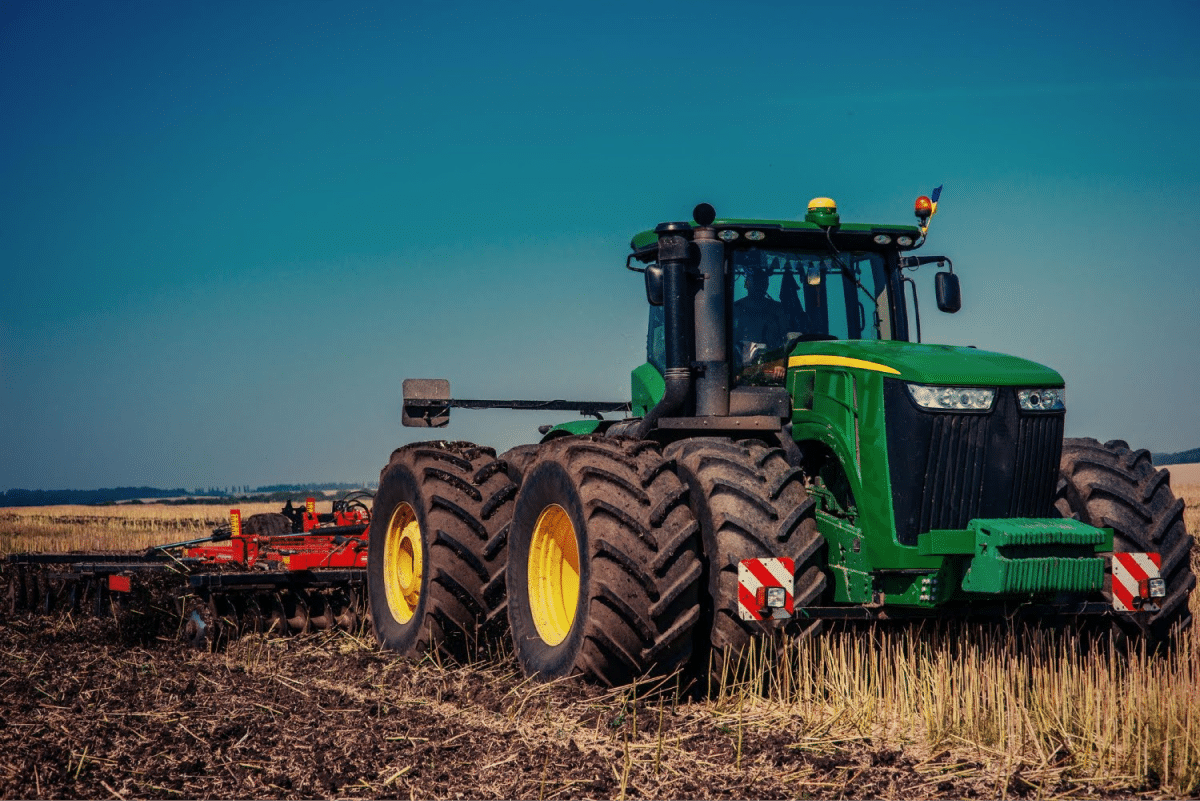
Hard work and good weather are only two of the many factors that modern agriculture relies on. Large acreage, shifting seasonal needs, animal duties, crop output, and ever-tighter operating schedules are among the challenges faced by farmers and ranchers. Equipment that is appropriate for each duty may assist agricultural firms in making better use of their time and labor while making these obligations easier to handle.
One property’s equipment requirements could be very different from another’s. Different considerations apply to smaller family properties, mixed farms, livestock ranches, and grain operations. Operators may thus create a machinery lineup that accurately represents how their land is utilized by having a thorough understanding of the functions of the main equipment types.
The Basis Of Farm Operations: Tractors
Tractors are among the most adaptable machinery on agricultural estates. Depending on the attachments being utilized, they may assist with soil preparation, planting, mowing, moving Materials, feeding, and a host of other tasks.
There is more to buying a tractor than just picking the one with the most horsepower. The size of the property, the topography, the needs of the tool, the lifting capacity, the maneuverability, and the anticipated working hours are all important factors. While bigger enterprises often need far more power for rigorous fieldwork, a compact tractor could be useful around buildings and smaller areas.
Additionally, technology that enables operators to operate more precisely may be included in modern tractors. Features pertaining to equipment control, monitoring, and guiding may facilitate more reliable field operations, depending on the machine.
Tools For Field Management And Preparation
Long before any crops are harvested, successful agricultural production starts. Tillage and associated tools are still crucial on many farms since soil and field preparation might take many steps.
Depending on the soil conditions and the production method being used, discs, cultivators, harrows, plows, and other tools might be chosen. Operators may adapt equipment to individual circumstances and crop needs instead of treating every area in the same manner.
Equipment for planting and sowing is equally crucial. Making greater use of the given acreage may be facilitated by precise seed planting and regular spacing. Operators may cover fields within constrained planting windows by selecting equipment with the right capacity.
Forage And Hay Equipment
Forage production and processing may account for a significant portion of the yearly effort for livestock operations. Forage is moved from standing crop to stored feed with the use of mowers, conditioners, rakes, balers, and similar equipment.
Because weather may have an immediate impact on the hay production process, timing is very crucial. Operators can finish each step without needless delays if the machinery is the right size for the land.
Instead of concentrating on a particular machine, those looking at Torgersons farm and ranch equipment would want to think about the whole forage process. The efficiency of work from cutting through storage may be impacted by the compatibility of tractors, tools, and handling equipment.
Equipment For Material Handling And Loaders
Materials are constantly being moved in agricultural estates. Pallets, hay, feed, dirt, manure, fence materials, and other bulky things often need to be moved about the site.
The amount of manual handling needed for these tasks may be decreased using loaders and appropriate attachments. Throughout the year, a single machine may be used for a variety of tasks thanks to attachments like buckets, forks, and grapples.
This adaptability may be particularly helpful for farms where equipment has to be used for several reasons rather than just one seasonal duty.
Livestock Operations Equipment
Field machinery is not the only equipment needed on ranches. Equipment for feeding, bedding, manure handling, pasture care, and property maintenance may be needed for everyday livestock management.
When there is a lot of labor or severe weather, dependable equipment becomes very important. Equipment shortages cannot be used as an excuse to put off feeding cattle. Because of this, while choosing equipment, ranch operators often take serviceability and parts availability into account in addition to performance.
Additionally, the equipment should fit the operation’s physical arrangement. What size and kind of equipment is viable might depend on a number of factors, including gate widths, barn clearance, feeding areas, ground conditions, and distances between operating sites.
Constructing A Fleet Of Equipment Based On Real Needs
Choosing equipment based on actual operating needs is most beneficial for modern agricultural operations. The right equipment is not determined just by acreage. Purchase selections should be influenced by a variety of factors, including crops, animal numbers, topography, labor availability, seasonal workloads, and future plans.
The largest number of machines is not always present in a well-planned equipment fleet. Rather, it offers the ideal balance of strength, capacity, adaptability, and dependability. Farmers and ranchers may better prepare their businesses for harsh seasons and the ever-changing demands of agricultural labor by carefully matching equipment to daily duties.